Your Employees Are Already Leaking Company Data Into AI Tools
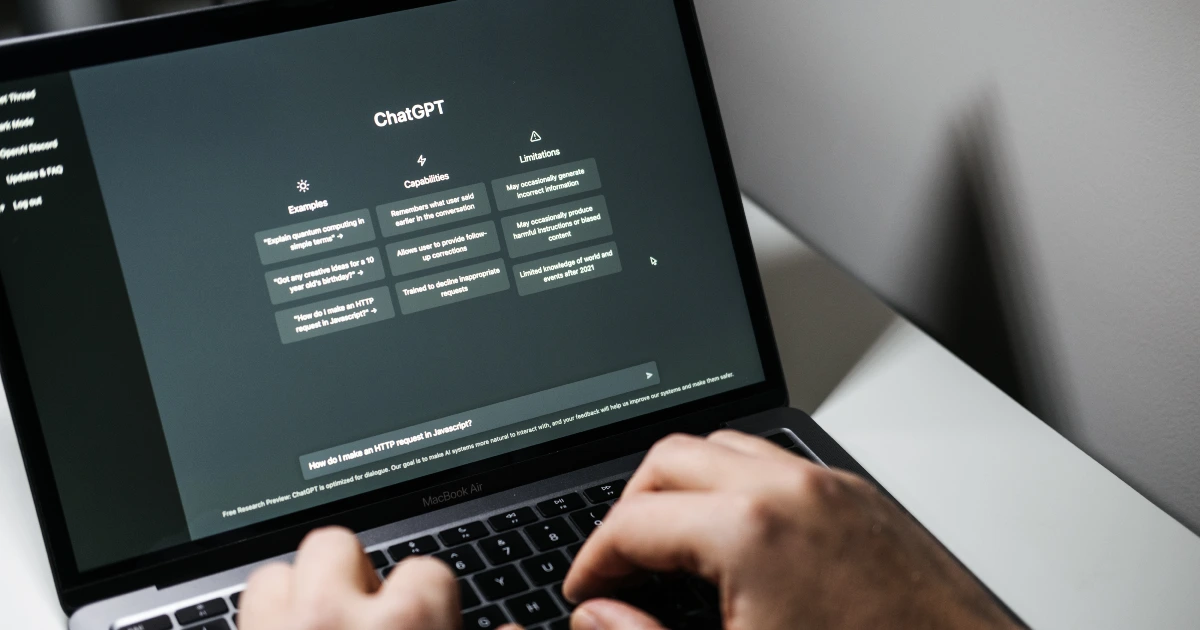
In the spring of 2023, Samsung let engineers in its semiconductor division start using ChatGPT to help with their work. It's one of the most sophisticated technology companies on earth, staffed by exactly the kind of people you'd expect to understand the risk. Within about 20 days, it had three separate leaks of confidential company information, and Samsung banned the tool company-wide.
Nobody hacked anything. No one acted maliciously. Three capable engineers, trying to do their jobs faster, pasted proprietary company data into a public AI tool, and in doing so handed it to an outside company's servers with no way to get it back.
This is the AI risk that applies to your business today, whether or not you've deployed a single AI system of your own. Because the truth is that your employees are almost certainly already using these tools, and what they paste into them can leave your control the moment they hit enter.
What actually leaked
The three incidents were mundane, which is the whole point. In one, an engineer pasted proprietary source code into ChatGPT to help debug it. In another, an engineer used it to help optimize an internal process related to chip manufacturing. In the third, someone fed in the transcript of a confidential internal meeting to have the AI produce a tidy set of notes.
Every one of these is a genuinely useful application. Debugging code, streamlining a process, summarizing a meeting, this is exactly the productive, sensible work people reach for AI to do. That's what makes the risk so easy to walk into. The employees weren't misusing the tool. They were using it exactly as intended. The problem was what they fed it.
Why pasting into a public AI tool is different
Here's the part many people don't fully register: when you paste text into a public, consumer AI tool, that text goes to the provider's servers, and depending on the tool and its settings, it may be retained and even used to help train future versions of the model. Samsung's specific fear was straightforward, once the data was on an outside company's servers, there was no easy way to retrieve it or delete it, and it was now outside Samsung's control.
Think about what that means for the three leaks. Proprietary source code, sensitive manufacturing details, and the contents of a private meeting all left the building, permanently, through a text box. There was no breach to detect, no alarm to trip. It looked exactly like normal work, because it was normal work, done with the wrong tool.
For most businesses this isn't hypothetical and it isn't in the future. Staff are pasting in client information, financial figures, contracts, strategy documents, and internal notes right now, to summarize, to rewrite, to analyze. Each of those is a small, invisible export of confidential data, and unlike Samsung, most companies don't even find out.
The wrong lesson and the right one
Samsung's response was to ban the tools outright. That's understandable as an emergency measure, but as a long-term strategy an outright ban is usually the wrong answer, and it tends to fail. If AI genuinely makes people more productive, and it does, banning it doesn't stop your staff from using it. It just pushes them onto their personal phones and accounts, where you have zero visibility and zero control. A ban you can't enforce is worse than no policy, because it gives you the illusion of safety while the leaks continue off the books.
The right lesson is that this is a governance problem, not a technology problem. The goal isn't to keep AI away from your people. It's to give them a safe way to use it, so they don't reach for an unsafe one.
How to let your team use AI without leaking the business
Write a clear, simple policy on what can and can't go into AI tools. Most employees have genuinely never thought about where their pasted text goes. A short, plain-language rule, no client data, no source code, no financials, no confidential documents in public AI tools, prevents most of these incidents on its own. People follow rules they understand; they can't follow rules that were never stated.
Provide a sanctioned tool, not just a prohibition. Enterprise versions of these AI tools exist specifically to address this: they can be configured so your data is not retained or used for training, and they keep information within controlled boundaries. Giving staff an approved, safe option is what makes the policy stick, because now the safe path and the productive path are the same path.
For sensitive work, keep the data inside your own walls. Where the information is truly sensitive, client records, regulated data, core intellectual property, the strongest answer is an AI setup where the data never leaves an environment you control. This is very achievable now, and it's exactly the kind of deployment that lets a business get the productivity of AI without exporting its crown jewels to someone else's servers.
Train people on the why, not just the what. Samsung's engineers were brilliant and still didn't think it through, which tells you that intelligence isn't the safeguard. A five-minute explanation of where the data actually goes does more than a page of rules, because once someone understands that pasting equals exporting, they self-police far better than any policy can force them to.
The real lesson
We help businesses put AI to work safely, and this is often the very first thing we address, because it's the risk that's already live in most organizations before any formal AI project begins. Your team wants to use these tools. They probably already are. The question is not whether AI is in your business. It's whether it's in your business on terms you control.
Samsung learned in 20 days that the smartest people in the building will still paste secrets into a text box if no one has given them a safe alternative and a clear reason not to. The fix isn't fear or prohibition. It's a safe path, a clear rule, and an honest explanation of where the data goes.

Written by
Andrew Lay
Andrew Lay is the founder and CEO of Hiero, a Michigan-based development studio that helps businesses use AI, automation, and custom software to improve how they operate. A business strategist specializing in AI, Andrew brings more than 20 years of experience building apps, digital products, and operational systems. His work focuses on the part of AI adoption most companies skip: identifying the right business problem, determining whether AI is actually the right solution, defining a defensible return, and putting the controls and feedback loops in place to protect that return after launch. Andrew is the author of the forthcoming book, Lessons from Bad AI Implementations and How to Guarantee ROI With AI, a practical field guide built from 34 verified failure cases and the Hiero implementation method. He also hosts the Hiero Exclusive podcast and speaks on AI strategy, entrepreneurship, and operational growth.
All posts by Andrew →